“How do I put together into a coherent image the pieces of my life? How do I find the basic plot of my story?”
James Hillman, The Soul’s Code

“How do I put together into a coherent image the pieces of my life? How do I find the basic plot of my story?”
James Hillman, The Soul’s Code
“Is that what they call vocation, what you do with joy as if you had fire in your heart, the devil in your body?
Josephine Baker


Living here
You are probably wondering
What makes habits of the mind
Last a lifetime:
LOVE,
Support all creatures great and small,
collaboration and community,
history,
culture,
local music.
You get one mind.
Feed it well.
Use it for good.
Spring comes.
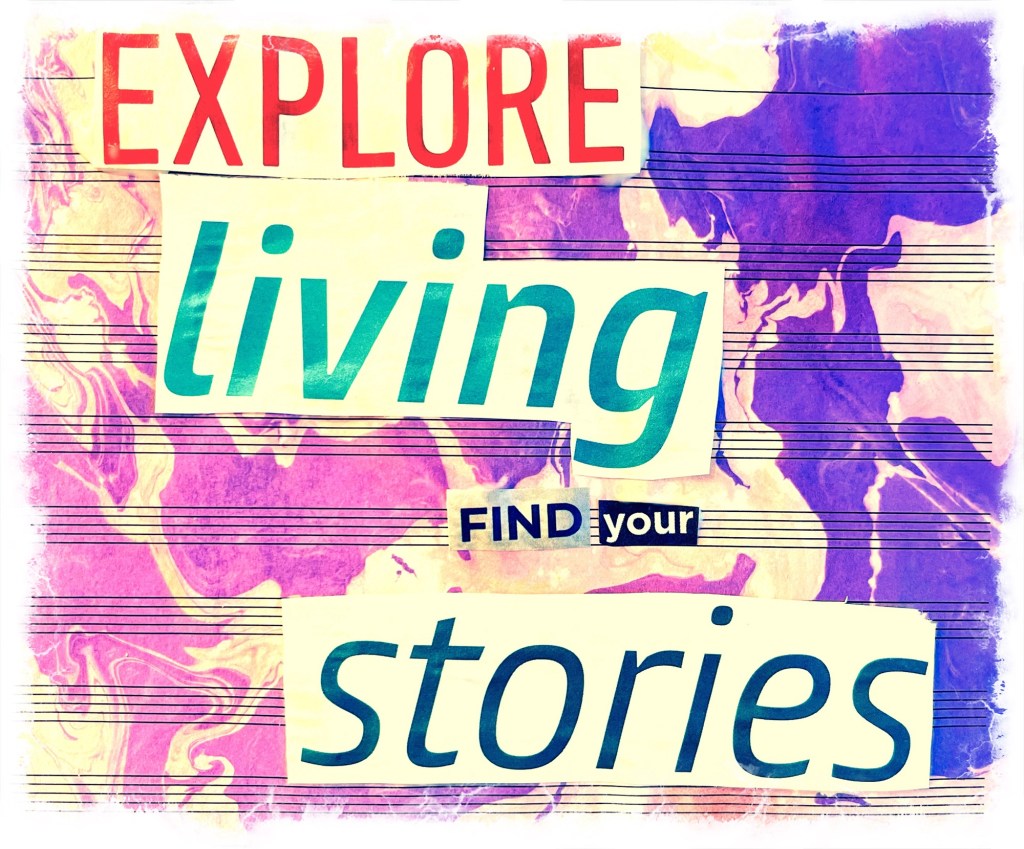
Explore living.
Find your stories.
“In a time when we have more access than ever before to the traumas of this world, how will you resist the tide of despair? Let beauty be your anchor. If you find the lake view too bright, bring your gaze closer, perhaps all the way to your own flesh and blood. Life is monstrous on the threshold of apocalypse. The practice of beholding, this fidelity to beauty in all things, I’ve come to believe, is no small form of salvation.”
From Black Liturgies by Cole Arthur Riley
This being human is a guest house.
Every morning a new arrival.
A joy, a depression, a meanness,
some momentary awareness comes
As an unexpected visitor.
Welcome and entertain them all!
Even if they’re a crowd of sorrows,
who violently sweep your house
empty of its furniture,
still treat each guest honorably.
He may be clearing you out
for some new delight.
The dark thought, the shame, the malice,
meet them at the door laughing,
and invite them in.
Be grateful for whoever comes,
because each has been sent
as a guide from beyond.
– Rumi


Seeing is believing.
Drawn this way, head over heels,
What makes a woman in the city the gift,
Is the staying power of perpetual beat and
Planting for the future with love.
“Making art is dangerous and revealing. Making art precipitates self-doubt, stirring deep waters that lay between what you know you should be, and what you fear you might be.”
From Art & fear by D. Bayles and T. Orland

Art is all about starting again.
From Art and Fear by David Bayles & Ted Orland

“L’uomo non è libero nella misura in cui non dipende da nulla o da nessuno: è libero nell’esatta misura in cui dipende da ciò che ama, ed è prigioniero nell’esatta misura in cui dipende da ciò che non può amare.
Così il problema della libertà non si pone in termini di indipendenza, ma in termini di amore. La potenza del nostro attaccamento determina la nostra capacità di libertà. Per terribile che sia il suo destino, colui che può amare tutto è sempre perfettamente libero, ed è in questo senso che si è parlato della libertà dei santi. All’estremo opposto, coloro che non amano nulla, hanno un bello spezzare catene e fare rivoluzioni: rimangono sempre prigionieri. Tutt’al più arrivano a cambiare schiavitù, come un malato incurabile che si rigira nel suo letto.”
“Human beings are not free in the measure in which they depend on nothing or no one: they are free in the exact measure in which they depend on what they love, and they are captive in the exact measure in which they depend on what they cannot love.
Therefore, the problem of freedom cannot be tackled in terms of independence but in terms of love. The power of our attachment determines our ability to be free. As terrible as their destiny might be, those who can love everything are perfectly free and that’s how we can talk of the freedom of the saints. On the other hand, those who love nothing, have a good amount of chains to break free from and revolutions to make: they will always remain captive. All they can do is perhaps change their bondage, like a sick person, who can turn over again and again in their bed.”
(translated from the Italian by Small Circle Big Circle)
 small circle big circle