“…… you must always keep in mind that a path is only a path; if you feel you should not follow it, you must not stay with it under any conditions.
To have such clarity you must lead a disciplined life. Only then will you know that any path is only a path and there is no affront, to oneself or to others, in dropping it if that is what your heart tells you to do.
But your decision to keep on the path or to leave it must be free of fear or ambition. I warn you.
Look at every path closely and deliberately. Try it as many times as you think necessary.
This question is one that only a very old man asks. Does this path have a heart?
All paths are the same: they lead nowhere. They are paths going through the bush, or into the bush.
In my own life I could say I have traversed long long paths, but I am not anywhere.
Does this path have a heart? If it does, the path is good; if it doesn’t, it is of no use. Both paths lead nowhere; but one has a heart, the other doesn’t. One makes for a joyful journey; as long as you follow it, you are one with it. The other will make you curse your life. One makes you strong; the other weakens you.
Before you embark on any path ask the question: Does this path have a heart? If the answer is no, you will know it, and then you must choose another path.
The trouble is nobody asks the question; and when a man finally realizes that he has taken a path without a heart, the path is ready to kill him. At that point very few men can stop to deliberate, and leave the path.
A path without a heart is never enjoyable. You have to work hard even to take it. On the other hand, a path with heart is easy; it does not make you work at liking it.
From The Teachings of Don Juan by Carlos Castaneda
I asked God if it was okay to be melodramatic and she said yes I asked her if it was okay to be short and she said it sure is I asked her if I could wear nail polish or not wear nail polish and she said honey she calls me that sometimes she said you can do just exactly what you want to Thanks God I said And is it even okay if I don’t paragraph my letters Sweetcakes God said who knows where she picked that up what I’m telling you is Yes Yes Yes
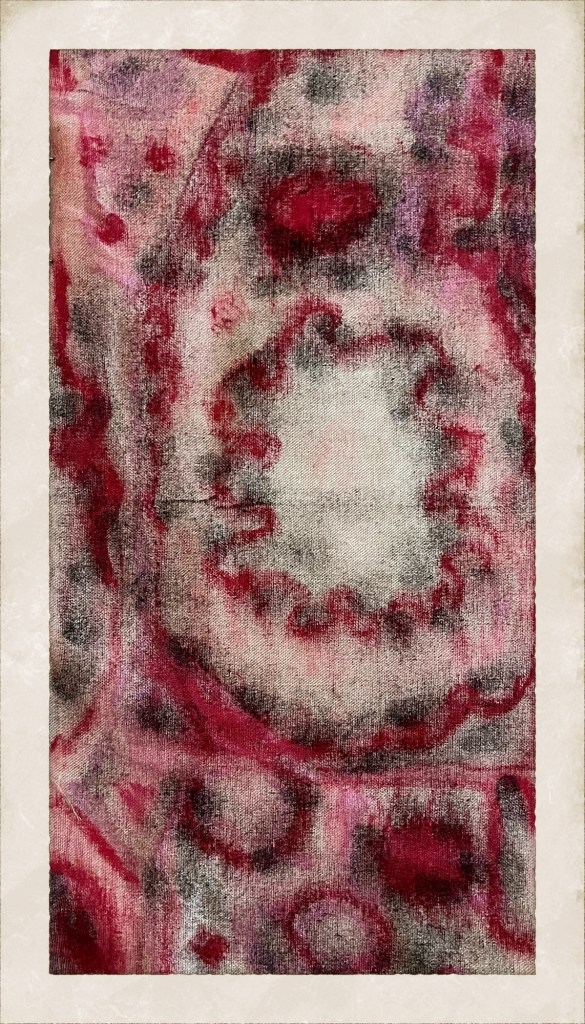
Lipstick and eye shadow on linen by Small Circle Big Circle
Il dono più grande del maestro non è il dono del sapere ma quello di saper “tacere l’amore.” Questo dono è il più prezioso perché non vincola l’allievo ad alcuna obbedienza, ma lo lascia sempre libero di andarsene, di separarsi dal maestro.
Da L’ora di Lezione di Massimo Recalcati
Translation:
The greatest gift of the teacher is not the gift of knowledge but rather that of knowing how to keep their love quiet. This is the most precious gift because it doesn’t not bind the student to any form of obedience but rather it lets them free to leave, to separate themselves from the teacher.”
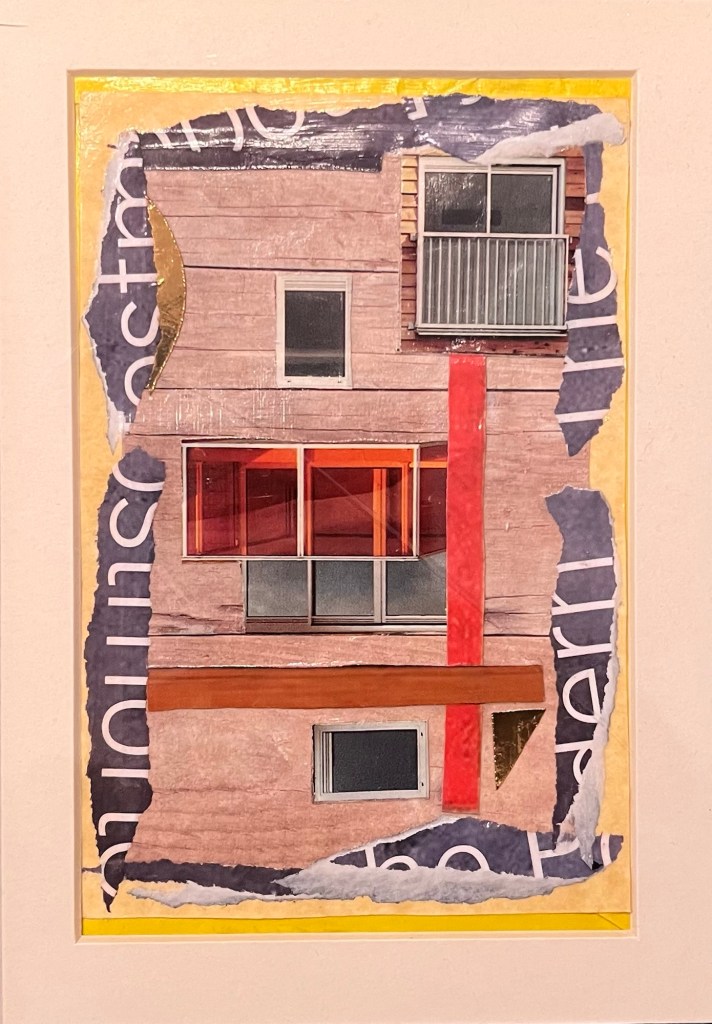
“A house may have a palpable soul if it is beautiful in some ways, has a personality and presence, has a visible history, shows interest beyond functionality, and has a degree of complexity. You can love such a house and miss it when you’re away or if it’s torn. This kind of love is a sign that soul is present.”